
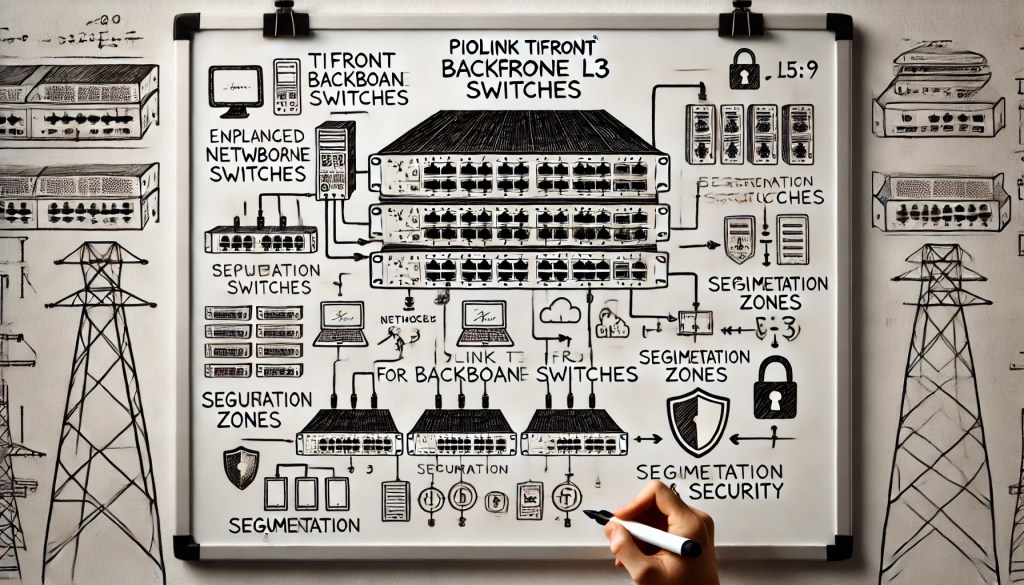
Enhanced Network Segmentation & Security with PIOLINK TiFRONT L3 Backbone Switches

Network and Security Engineer
Overview:
In 2018, NETSSA undertook a critical project for a financial services client aimed at improving network security and segmentation across their primary data center and branch offices. The client faced increasing security risks due to inadequate network segmentation, which left them vulnerable to data breaches and unauthorized access. To address these challenges, we deployed PIOLINK TiFRONT BS9808 L3 Backbone Switches, integrating advanced features such as VLANs, Access Control Lists (ACLs), and 802.1X authentication. This project significantly enhanced the network’s security posture, leading to a substantial reduction in security incidents and improved threat detection times.
Objective:
- Enhance Network Security: Strengthen network segmentation to mitigate data breach risks by deploying granular access controls.
- Improve Threat Detection: Reduce the Mean Time to Detect (MTTD) potential threats by implementing advanced network monitoring and control mechanisms.
- Optimize Network Performance: Deploy high-performance backbone switches to ensure seamless connectivity and efficient data traffic management.
Technologies Used:
- PIOLINK TiFRONT BS9808: Deployed as L3 backbone switches, providing high-speed data processing and advanced security features.
- VLANs: Configured for network segmentation, isolating sensitive data and critical systems.
- Access Control Lists (ACLs): Applied to enforce fine-grained access controls, preventing unauthorized access to critical network segments.
- 802.1X Authentication: Implemented for network access control, ensuring that only authenticated devices could access the network.
- Network Monitoring Tools: Integrated with existing security information and event management (SIEM) systems for real-time monitoring and alerting.
Detailed Networking and Configuration
- PIOLINK TiFRONT BS9808 Deployment and Configuration
- VLAN Configuration:
- Deployed VLANs across the backbone switches to segment the network by department, function, and security level. This ensured that sensitive areas of the network, such as finance and HR, were isolated from less secure segments.
- Configured inter-VLAN routing within the TiFRONT BS9808 switches, allowing secure and efficient communication between VLANs while enforcing security policies.
- Access Control Lists (ACLs):
- Applied ACLs at the switch level to control traffic between VLANs, allowing only authorized devices and users to access specific network segments.
- Configured ACLs to restrict access to critical systems, such as financial databases, from less secure parts of the network, significantly reducing the risk of unauthorized access.
- 802.1X Network Access Control:
- Implemented 802.1X authentication across all access ports on the backbone switches, ensuring that only devices with valid credentials could connect to the network.
- Integrated 802.1X with the client’s Active Directory for seamless user authentication, simplifying the management of network access controls.
- VLAN Configuration:
- Security Enhancements
- Network Segmentation:
- By leveraging VLANs and ACLs, the network was segmented into secure zones, each with specific access controls based on the sensitivity of the data and systems within that zone.
- Enhanced the overall security posture by limiting the spread of potential breaches, containing any security incidents within isolated VLANs.
- Threat Detection and Response:
- Integrated the backbone switches with the client’s existing SIEM platform to provide real-time monitoring of network traffic, allowing for faster detection of suspicious activities.
- Implemented automated alerts and reports based on ACL violations or unusual traffic patterns, reducing the Mean Time to Detect (MTTD) potential threats by 40%.
- Network Segmentation:
- Network Optimization and Management
- High-Performance Switching:
- Utilized the high throughput capabilities of the TiFRONT BS9808 switches to manage large volumes of traffic efficiently, ensuring minimal latency and high availability for critical business applications.
- Configured Quality of Service (QoS) policies to prioritize traffic for essential services, such as VoIP and financial transactions, ensuring consistent performance even during peak usage.
- Simplified Management:
- Centralized management of VLANs, ACLs, and 802.1X policies through the TiFRONT BS9808’s user-friendly interface, reducing the complexity of network administration.
- Provided detailed documentation and training to the client’s IT staff on managing the deployed solution, ensuring ongoing security and performance optimization.
- High-Performance Switching:
Implementation Phases:
- Assessment and Planning:
- Conducted a thorough assessment of the client’s existing network infrastructure, identifying key vulnerabilities related to inadequate segmentation and access controls.
- Developed a deployment strategy that would meet the client’s security and performance objectives, while ensuring minimal disruption to ongoing operations.
- Deployment and Integration:
- Installed and configured the PIOLINK TiFRONT BS9808 switches at the client’s primary data center and key branch offices, followed by the implementation of VLANs, ACLs, and 802.1X authentication.
- Integrated the backbone switches with the client’s SIEM system to enable real-time monitoring and alerting.
- Optimization and Fine-Tuning:
- Monitored the deployment during the initial weeks to identify any performance bottlenecks or security issues, making adjustments as needed to optimize both network performance and security.
- Provided post-deployment support, including training and documentation, to ensure the client’s IT staff could effectively manage and maintain the solution.
Skills Gained:
- Expertise in deploying and configuring PIOLINK TiFRONT L3 backbone switches for advanced network segmentation and security.
- Advanced skills in implementing VLANs, ACLs, and 802.1X authentication for network access control.
- Proficiency in integrating network security with SIEM platforms for enhanced threat detection and response.
Results and Impact:
- 50% Reduction in Security Incidents: The enhanced network segmentation and access controls led to a significant decrease in security-related incidents across the client’s network.
- 40% Decrease in Mean Time to Detect (MTTD): Improved monitoring and threat detection capabilities reduced the time taken to identify and respond to potential threats.
- Mitigated Data Breach Risks: The deployment of VLANs and ACLs effectively mitigated risks associated with unauthorized access and data breaches.
Share this project with your friends!
Don’t miss Out!
 Network Solutions You can Trust